
Rider – Stunt Bike Racing
KetchappArcade
4.327.10K Reviews
- Version
- 3.07.0.01
- Installs
- 100.00M
- Age Rating
- Everyone
Screenshots





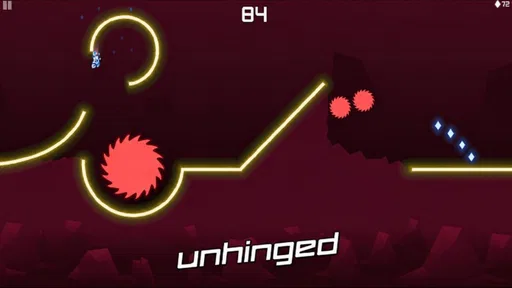


Our Review of Rider – Stunt Bike Racing
 Analysis by Appyee
I usually know within a few minutes whether a mobile arcade game is going to earn another spot on my phone. Rider – Stunt Bike Racing makes a strong first impression because its central challenge is easy to understand: keep a bike moving, time your flips, and try to land cleanly rather than turning a jump into a crash. It feels lively without asking me to learn a long rulebook, which is exactly why it works well for a quick break.
That immediate appeal is not the whole story, though. A game built around repeating attempts has to stay satisfying after the controls stop feeling new. I find Rider at its best when I treat each run as a small test of timing, not as a long racing session. If you enjoy chasing a better result through practice, there is a clear reason to return. If you want a deep career, elaborate vehicle tuning, or a steady stream of narrative goals, this is a much narrower kind of entertainment.
The Adrenaline-Pumping Gameplay
From the moment I fired up Rider – Stunt Bike Racing, I was hooked. The premise is simple: you’re a stunt biker navigating through a series of increasingly challenging tracks. But here's the catch – it’s not just about speed; it’s about style. Pulling off daring flips and heart-stopping jumps is the name of the game.
Control-wise, it’s as smooth as a freshly paved road. With intuitive touch controls, you’re flicking your way through flips and somersaults with ease. It’s all about balancing speed and acrobatics, and let me tell you, nailing that perfect landing after a triple flip is ridiculously satisfying.
The simplicity also makes it easy to pick up in an ordinary gap in the day. I can imagine playing a run while waiting for a drink or during a short commute, then putting the phone away without needing to remember a complicated sequence of objectives. The trade-off is that a brief session can turn into repeated retries: one awkward landing makes me want to try again, and that can stretch a planned minute into more. I’d avoid starting a run when I need to leave immediately.
For a better feel for the controls, I recommend resisting the urge to flip at every opportunity. A stunt is only useful if the bike comes down under control, so I pay attention to the shape and length of the jump before committing. When a section keeps catching me out, I change one thing at a time—take off with a different rhythm or attempt fewer rotations—rather than repeating the same risky move and hoping for luck. That small habit makes failures more informative.
Visuals and Soundtrack
Visually, the game is a feast for the eyes. The neon-infused graphics give off a vibrant, almost otherworldly feel, which pairs beautifully with the futuristic bike designs. It's like Tron meets MotoGP, and I’m all for it.
The soundtrack is another standout feature. The pumping electronic beats perfectly complement the high-speed action, wrapping you in a cocoon of adrenaline as you race against the clock. Trust me, you’ll find yourself bopping along as you pull off those gravity-defying stunts.
The strong visual contrast helps me read the action quickly, which matters in a game where a landing can be decided in a moment. At the same time, the bright presentation is a matter of taste: I enjoy it in short bursts, but players who prefer realistic bikes, natural scenery, or a calmer screen may find the style too loud. Sound is part of the energy, yet the game’s basic appeal does not depend on sitting through a long session with headphones. I’d keep the volume at a comfortable level and let the quick play pattern do the work.
A Challenge for All Levels
One thing I really appreciated about Rider – Stunt Bike Racing is its accessibility. Whether you’re a newbie or a seasoned stunt pro, there’s something here for everyone. The early levels offer a gentle introduction, letting you get a feel for the controls and physics. But don’t be fooled; as you progress, the difficulty ramps up, challenging you to master the art of precision and timing.
And if you’re a fan of collecting and upgrading, you’re in luck. Unlocking new bikes and customizing them adds an extra layer of depth and motivation to keep you coming back for more. It’s a rewarding cycle of trial, error, and triumph that keeps you glued to the screen.
The progression is most satisfying for someone who likes a compact goal: improve a run, get further, and have another reason to practise. It is less compelling if your idea of progression means carefully comparing detailed statistics or building a bike for a particular race strategy. I would approach new bikes as a way to refresh the experience, not assume that collecting alone will transform the core challenge. The riding and landing remain the reason to play, so a cosmetic change cannot replace the satisfaction of learning a tricky stretch.
That distinction helps answer a practical question: is it suitable for someone who has never played a stunt-riding game? I think so, especially if they are comfortable with quick touch interactions and do not mind failing while they learn. The opening gives room to understand the basic rhythm before the more demanding sections test precision. On the other hand, if you dislike retry-based games or get irritated when progress depends on timing a small input, the same learning curve may feel like friction rather than a challenge.
Rider is an arcade game from Ketchapp, and the focused design makes it easy to understand why it has reached a broad audience. It is free to download, with in-app purchases priced from $0.99 to $79.99 per item, so I’d decide in advance whether I’m happy to enjoy the game at its natural pace without spending. The current version is 3.06.0.01, it needs Android 7.0 or later, and its Everyone age rating makes it suitable for a general audience. Those details make it approachable, but they do not change the key question: do you enjoy refining a skill through repeated short attempts?
For an everyday example, I would use it as a waiting-room game rather than the main event of an evening. I can try a few runs, notice that I keep over-rotating on a jump, and use the next attempt to correct that one mistake. If I’m tired or distracted, though, the same precision can make the session feel less relaxing. A slower puzzle game is a better choice when I want to pause and think; a conventional racing game is a better fit when I want sustained competition and the feeling of driving a course rather than mastering stunt landings.
The Community and Competition
One of the game’s strengths is its competitive edge. With leaderboards and daily challenges, there’s always a reason to push yourself a little harder. Trying to beat a friend’s score or climb to the top of the leaderboard adds a fun, competitive dynamic that keeps the gameplay fresh and engaging.
Plus, the game’s community is pretty active. Sharing tips, tricks, and even failures make for a fun and supportive environment. Whether you’re swapping stories of epic crashes or sharing that one-in-a-million perfect run, the camaraderie adds an extra layer of enjoyment.
Competition works best for me as an optional nudge, not as a requirement. A personal target—getting through a difficult passage more reliably, for example—can be more satisfying than comparing every result with someone else’s. Leaderboards give players who enjoy score chasing a reason to polish their timing, while anyone who prefers private play can still focus on the core riding. I would not choose this as my main social game if I wanted team play or extended conversations to be central; the appeal here is the run itself and the satisfaction of doing it better.
Daily challenges can also create a useful routine, but routines are only valuable when they remain enjoyable. I would treat them as a prompt to open the game, not as a chore to complete. If a particular day’s task feels frustrating, there is no need to turn a small arcade game into another obligation. That is one of the important long-term trade-offs: the compact design makes it easy to return, but it also depends on the player supplying their own reasons to keep practising once the first novelty has passed.
Keeping It Enjoyable Over Time
For maintenance, this is a low-commitment game in the sense that I can come back for a short session without preparing a loadout or remembering a complex plot. That is a genuine advantage for a phone game. The burden is more about managing attention than maintaining a detailed routine: repeated retries can be absorbing, and the urge to improve a score can outlast the time I meant to spend playing. I find it helps to pick a small aim before opening it—practise a section, try a challenge, or simply play a few runs—and stop when that aim is met.
Another useful boundary is to separate enjoyment from purchases. Since optional in-app items span a wide price range, I would not tap through a purchase just because I am impatient to make progress or want a new item immediately. Free access lets me judge whether the basic stunt loop is enough for me first. If it is, there is no reason to spend merely to prove commitment; if it is not, paying is unlikely to fix a mismatch with the game’s retry-heavy style.
Its long-term competition is also worth framing honestly. Compared with endless runners, Rider asks for more deliberate control over a vehicle’s rotation and landing, so it can feel more hands-on than simply reacting to obstacles. Compared with full racing games, it trims away the broader race-day fantasy and concentrates on acrobatics and short challenges. I would pick it when I want a precise arcade diversion, not when I want realistic handling, a lengthy campaign, or a broad range of race modes.
Players wondering whether the game can work offline should check the requirements and behavior on their own device before relying on it for travel; I would not plan an important trip around an assumption about connectivity. More generally, the best way to judge fit is to try the core controls and see whether the landing-focused rhythm feels rewarding. The game is a stronger match for people who enjoy practice and compact goals than for those who need every session to introduce a new system or story beat.
Final Thoughts
So, is Rider – Stunt Bike Racing worth downloading? Absolutely. It’s a thrilling, challenging, and visually stunning game that offers hours of entertainment. Whether you’re killing time or on a quest to become the ultimate stunt rider, this game delivers on all fronts. Just remember, it’s not just about the ride; it’s about the journey. So gear up, hit the track, and let the stunts begin!
My recommendation comes with one qualification: its lasting value depends on whether you enjoy getting better at a focused skill. The average rating is 4.3 from around 1.5 million ratings, and the game has over 100 million installs, which speaks to its wide reach without making it the right fit for every player. I’d keep it installed if short sessions, retries, and the occasional challenge still feel satisfying after the initial visual rush. If I found myself opening it out of habit and closing it annoyed, I’d remove it without guilt and choose a game with more variety in its moment-to-moment play.
For me, that is the fairest way to judge its place on a phone: not by how exciting the first few flips look, but by whether I still want to make another careful attempt a week later. The game is free, easy to sample, and clear about the kind of skill it asks for. Give it a try if precise stunt riding sounds fun; skip it if repeated timing challenges are exactly what you are trying to avoid.
Privacy and Permissions
See what permissions an app requests and how it handles your data.
- Photos/Media/Files
- read the contents of your USB storage, modify or delete the contents of your USB storage
- Storage
- read the contents of your USB storage, modify or delete the contents of your USB storage
- Wi-Fi connection information
- view Wi-Fi connections
- Other
- view network connections, full network access, control vibration, prevent device from sleeping, Google Play license check
Verdict
Strengths of Rider – Stunt Bike Racing
- Intuitive controls for smooth gameplay.
- Vibrant graphics enhance visual appeal.
- Wide variety of challenging levels.
- Regular updates with new tracks.
- Engaging sound effects elevate the experience.
Limitations of Rider – Stunt Bike Racing
- Ads can be intrusive during gameplay.
- In-app purchases may be costly.
- Occasional lag on older devices.
- Limited customization for bikes.
- Some levels are repetitively designed.
Other Releases by Ketchapp
View All


Similar Picks in This Category
View All
Subway Surfers
SYBO Games4.6

Stickman Party 234 MiniGames
PlayMax Game Studio4.6

Subway Princess Runner
Ivy4.4

Temple Run
Imangi Studios4.2

Zombie Tsunami
Mobigame SAS4.6

Stack Ball - Crash Platforms
CASUAL AZUR GAMES4.5
Frequently Asked Questions
What is Rider – Stunt Bike Racing all about?
Rider – Stunt Bike Racing is a thrilling mobile game where players take on the role of a stunt biker. The game features a variety of challenging tracks filled with loops, jumps, and obstacles. Players must perform stunts and maneuvers to earn points and progress through increasingly difficult levels, all while enjoying stunning graphics and smooth gameplay.
Is Rider – Stunt Bike Racing available for both Android and iOS?
Yes, Rider – Stunt Bike Racing is available for download on both Android and iOS platforms. The game can be found on the Google Play Store for Android users and the Apple App Store for iOS users. Ensure your device meets the minimum system requirements for optimal performance.
Does Rider – Stunt Bike Racing offer in-app purchases?
Rider – Stunt Bike Racing includes in-app purchases, allowing players to buy additional features such as new bikes, customization options, and power-ups. While the game is free to download and play, these purchases can enhance the gaming experience. It's important for users, especially parents, to monitor spending if the game is played by children.
Can I play Rider – Stunt Bike Racing offline?
Rider – Stunt Bike Racing offers both online and offline modes. While you can enjoy the game without an internet connection, some features, such as leaderboards and certain events, require online access. Playing offline is a great option for gaming on the go without using data.
What are some tips for mastering levels in Rider – Stunt Bike Racing?
To excel in Rider – Stunt Bike Racing, focus on timing your stunts perfectly and maintaining balance. Practice makes perfect, so replay levels to improve your skills. Use power-ups strategically and upgrade your bike to tackle tougher tracks. Watching tutorials and following community forums can also provide helpful insights.
Play our best games!


